What Is Fine Robusta? A Guide for Specialty Roasters
For most of the specialty coffee industry's history, Robusta has been treated as a second-class citizen. It's the coffee that fills cheap blends, boosts caffeine in supermarket espresso, and gets blamed for bitterness and rubber notes that specialty roasters work hard to avoid. But this reputation is based almost entirely on commodity-grade Robusta — a category that tells us nothing about what Coffea canephora is actually capable of when grown with intention and assessed for cup quality.
That's where Fine Robusta comes in.
The Definition: What Makes Robusta "Fine"?
Fine Robusta is a quality designation for Coffea canephora evaluated using a standardised cupping protocol developed by the Coffee Quality Institute (CQI). Unlike commodity Robusta — typically graded only on physical defects and moisture content — Fine Robusta is assessed on sensory attributes: fragrance, flavour, aftertaste, salt/acid balance, bitter/sweet ratio, mouthfeel, and overall cup cleanliness.
The CQI's Q Robusta programme, launched in 2010, established the first internationally recognised framework for assessing Robusta cup quality. Coffees evaluated by licensed R Graders and scoring above a defined threshold qualify as Fine Robusta. This isn't a marketing term — it's a structured, repeatable assessment system with trained evaluators and documented standards.
How Fine Robusta Differs from Commodity Robusta
The difference between Fine Robusta and commodity Robusta is not genetic — it's agronomic, geographic, and post-harvest. The same species, grown in different conditions and processed with different levels of care, produces dramatically different cups.
Altitude is the most important factor. Commodity Robusta is typically grown below 600 metres, where warm temperatures accelerate cherry development and prioritise yield. Fine Robusta — including the lots we source from Indonesia's highland regions — is grown at 800 to 1,100 metres. The cooler temperatures slow cherry maturation, allowing sugars to develop more fully.
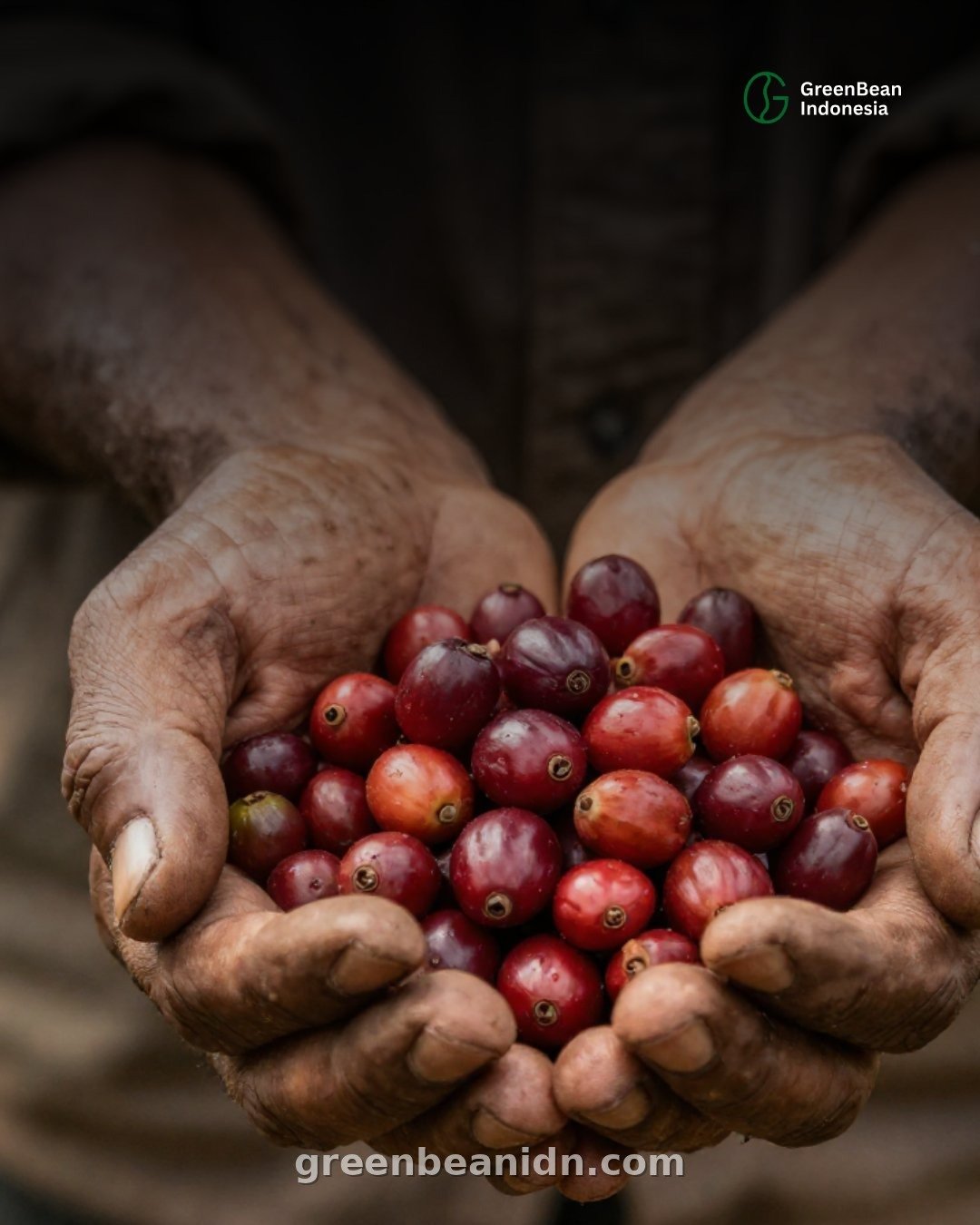
Selective harvesting is the second key differentiator. Commodity operations often strip-harvest entire branches regardless of ripeness. Fine Robusta production requires hand-picking red-ripe cherries selectively — labour-intensive, and it shows in the cup.
Post-harvest processing determines the final flavour expression. Fine Robusta lots can be processed as natural, honey, or fully washed — each producing a distinct cup profile while retaining the inherent character of the highland bean.
What Does Fine Robusta Taste Like?
This is where Fine Robusta surprises most specialty roasters encountering it for the first time. The cup profile of a well-grown, properly processed highland Robusta bears little resemblance to the harsh, rubbery commodity Robusta most professionals have been trained to avoid.
Common tasting notes in Fine Robusta from Indonesia's volcanic highlands include dark chocolate, caramel, roasted nuts, dried fruit, cedar, and tobacco. The body is typically full and velvety. The bitterness that characterises commodity Robusta is significantly reduced, replaced by a clean, structured finish with natural sweetness.
Fine Robusta also contains approximately twice the caffeine of Arabica and produces substantially more crema in espresso — both commercially valuable properties that become accessible without the flavour penalties of commodity quality.
Why Fine Robusta Matters for Your Roastery
Espresso blending: Fine Robusta's body, crema, and caffeine content make it a powerful component in espresso blends. A 10–20% addition to an Arabica-dominant blend increases crema stability and structural depth without introducing harsh notes.
Single-origin storytelling: As the specialty market matures, buyers and consumers are increasingly interested in less familiar origins and species. Fine Robusta from a traceable Indonesian origin offers a genuinely distinctive story that challenges assumptions and educates consumers.
Price point: High-quality Fine Robusta is typically priced below equivalent Arabica lots. For roasters building accessible single-origin or blended offerings, this creates real margin opportunity without sacrificing traceability.
Fine Robusta from Indonesia
GreenBean Indonesia sources Fine Robusta from smallholder farmers in Indonesia's highland growing regions — volcanic terroir at 800 to 1,100 metres above sea level where andisol soil, equatorial rainfall, and altitude-driven temperature variation create conditions that produce Fine Robusta with genuine cup distinction.
We offer three processing styles — Natural, Honey, and Washed — to suit different roast profiles. All lots ship with full traceability documentation and are available for sample evaluation before any commercial commitment.